Healing plants?
Evaluation of the antioxidants properties of medicinal plants.
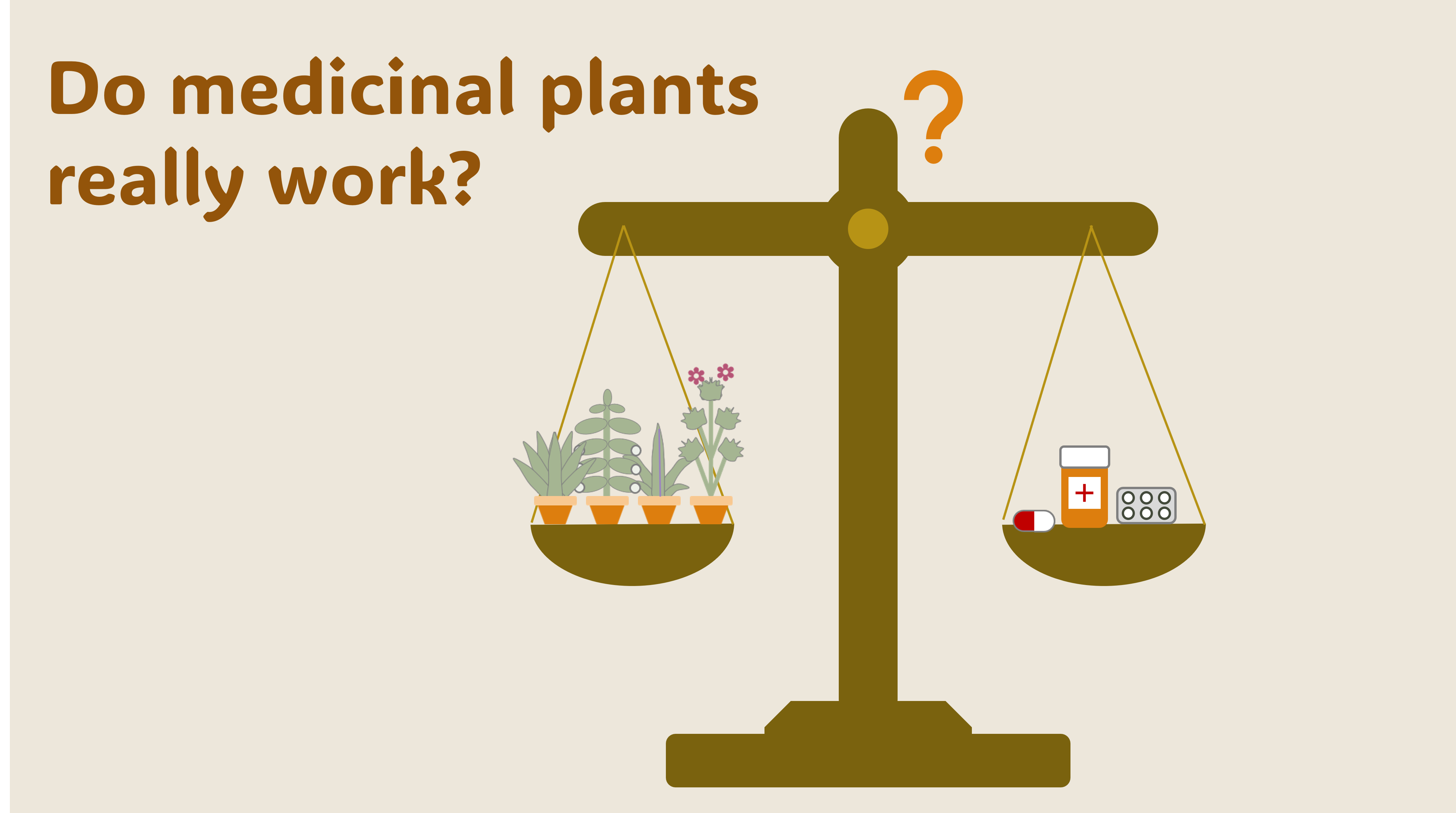
Let’s talk about: the evaluation of the presumed antioxidant effect of some specific medicinal plants.
Research question and objectives

Some plants 🌿 can be used in traditional medicine because of their beneficial effects on various diseases and health conditions, and can therefore be used as herbal remedies (Sen & Samanta 2015).
In this study, a Polish research team investigated the potential protective effects of 4 specific plants against skin diseases:
- Aloe vera, one of the most well-known medicinal plants, belongs to the Asphodelaceae family and grows naturally in tropical climates. It contains many biologically active compounds that have demonstrated significant anti-inflammatory, antineoplastic (i.e., acting against cancer cells), antifungal (i.e., acting against fungi that cause infections)and antimicrobial properties (Maan et al.2018, Surjushe et al. 2008)
- Bryophyllum pinnatum belongs to the Crassulaceae family and originates from Madagascar. It has traditionally been used in the treatment of asthma, diabetes, hypertension, diarrhoea and to promote the healing of ulcers (Onoja et al. 2018)
- Callisia fragrans belongs to the Commelinaceae family and grows naturally in Mexico. Its biologically active substances have been reported to act against herpes viruses or to help reducing arterial blood pressure (Yarmolinsky et al. 2010, Le et al. 2022)
- Pelargonium graveolens (also known as scented geranium) belongs to the Geraniaceae family and originates from South Africa. It has been associated with anti-allergic, anti-inflammatory, diuretic and anti-diabetic properties (Martins et al. 2017)

The skin contains many polyunsaturated fatty acids, making it particularly vulnerable to oxidation. When oxidation occurs, it can damage lipids, proteins and DNA, affecting collagen, skin tissue, and cells such as fibroblasts, which play an important role in maintaining healthy skin (Ledwożyw et al. 1986, Mesquita et al. 2014, Koselski et al. 2017). This process is know as oxidative stress which may therefore contribute to the development or progression of certain skin diseases.
Several factors can increase the risk of oxidative stress, such as the exposure to ultraviolet (UV) radiation, electromagnetic fields, X-rays, chemical pollutants, nutrition, drugs, cosmetics, alcohol consumption, tobacco smoke, and psychological stress (Rinnerthaler et al. 2015).
Given the reported biological properties of the aforedmentioned plants 🌿, the objective of this study was to assess their potential ability to protect skin cells 🧫 against oxidative stress and oxidative damage (or, to put it simply, do these plants have antioxidant properties that could help protect skin cells from damage?).
A brief presentation of the methodology

To achieve their objective, the authors prepared plants extract 🌿 at 3 different concentrations 🧪 (aka strengths): 0.875 g/ml, 1.75 g/ml and 3.5 g/ml.
They used an in vitro 🧫 model (meaning that the experiment was performed outside the living organism, and not directly on animal or humans as in in vivo studies) of a specific mouse cell line under controlled laboratory conditions. To reproduce oxidative stress, these cells were exposed to hydrogen peroxide (H2O2).
The researchers then added the different concentrations of each plant extract to the cells and waited 24h ⏱️ to see how they responded to the induced oxidative stress.
🔬 At the end of the experiment, the potential antioxidant properties of the tested plants were evaluated by measuring the antioxidant capacity of the cells, as well as markers of lipid and protein oxidation.
Results: watch out for Callisia fragrans!

The findings of this study support the antioxidant effects of Aloe vera, Bryophyllum pinnatum and Pelargonium graveolens: the oxidative stress parameters measured in the cells decreased significantly after incubation with extracts from these medicinal plant 🌿. This result justifies their utilisation in the treatment of cutaneous diseases.
It should be noted that these effects were observed in a dose-dependent manner: the higher the concentration of the plant extract, the stronger the protective effect observed in the cells.
But there was a surprising result for Callisia fragrans: instead of protecting the cells from oxidative stress, this plant showed no significant antioxidant effect and may even have had the opposite effect — a pro-oxidant effect.
This finding may be explained by the presence of certain compounds in the plant (such as polyphenols and flavonoids, if we want to use the fancy words) which can, depending on specific conditions, either help neutralise reactive oxygen species or, on the contrary, contribute to their formation (Eghbaliferiz & Iranshahi 2016).
One should not forget, however, that further studies are needed as these findings come from an in vitro study and therefore cannot directly establish the therapeutic effectiveness or safety of these plants in humans.
🧩 Putting everything together
The conclusion will be quite simple and short:
- Aloe vera, Bryophyllum pinnatum, and Pelargonium graveolens showed promising antioxidant effects
- Callisia fragrans gave a very different result, which raises questions about its potential use for skin-related applications
So the take-home message is pretty simple: natural does not automatically mean beneficial.
So, yep, beware of what you put on your skin!
Before we wrap up, I’d like to invite you to vote on the topic of the next article you’d like me to break down for you:
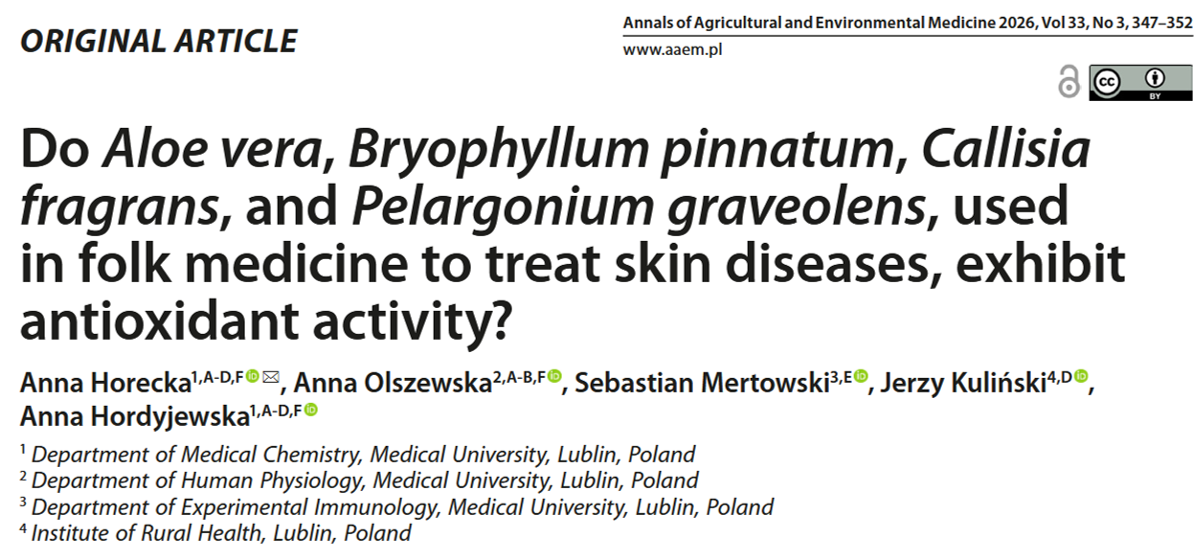
Read the article: Horecka, A., Olszewska, A., Mertowski, S., Kuliński, J. & Hordyjewska, A. (2026) Do Aloe vera, Bryophyllum pinnatum, Callisia fragrans, and Pelargonium graveolens, used in folk medicine to treat skin diseases, exhibit antioxidant activity? Ann Agric Environ Med, 33(3), 347–352. (https://doi.org/10.26444/aaem/216269).
Cited references:
- Eghbaliferiz S, Iranshahi M. 2016. Prooxidant Activity of Polyphenols, Flavonoids, Anthocyanins and Carotenoids: Updated Review of Mechanisms and Catalyzing Metals. Phytother Res 9:1379–1391 (doi:10.1002/ptr.5643)
- Koselski M, Olszewska A, Hordyjewska A, et al. 2017. Three Types of Ion Channels in the Cell Membrane of Mouse Fibroblasts. Physiol Res 66(1):63–73 (doi:10.33549/physiolres.933358)
- Le XT, Thi Nguyen LT, Nguyen PT, et al. 2022. Anti-hypertensive effects of Callisia fragrans extract on Reno-vascular hypertensive rats. Clin Exp Hypertens 44(5):411–418 (doi:10.1080/10641963.2022.2065286)
- Ledwożyw A, Michalak J, Stępień A, et al. 1986. The relationships between plasma triglycerides, cholesterol, total lipids and lipid peroxidation products during human atherosclerosis. Clin Chim Acta 155(3):275–83 (doi:10.1016/0009-8981(86)90247-0)
- Maan AA, Nazir A, Khan MKI, et al. 2018. The therapeutic properties and applications of Aloe vera: A review. J Herb Med 12:1–10 (doi:10.1016/j.hermed.2018.01.002)
- Martins CAF, Campos ML, Irioda AC, et al. 2017. Anti-Inflammatory Effect of Malva sylvestris, Sida cordifolia, and Pelargonium graveolens Is Related to Inhibition of Prostanoid Production. Molecules 22(11):1883 (doi:10.3390/molecules22111883)
- Mesquita CS, Oliveira R, Bento F, et al. 2014. Simplified 2,4-dinitrophenyl-hydrazine spectrophotometric assay for quantification of carbonyls in oxidized proteins. Anal Biochem 1:458:69–71 (doi:10.1016/j.ab.2014.04.034)
- Onoja SO, Ihejirika GQ, Nwankudu ON, et al. 2018. Antidiarrheal and Antioxidant Activities of Methanol Extract of Bryophyllum pinnatum Leaf Harvested from South-Eastern Nigeria in Mice. J Pharm 6810620 (doi:10.1155/2018/6810620)
- Rinnerthaler M, Bischof J, Streubel MK, et al. 2015. Oxidative stress in aging human skin. Biomolecules 5(2):545–89 (doi:10.3390/biom5020545)
- Sen T, Samanta SK. 2015. Medicinal plants, human health and biodiversity: a broad review. Adv Biochem Eng Biotechnol 147:59–110 (doi:10.1007/10_2014_273)
- Surjushe A, Vasani R, Saple DG. 2008. Aloe vera: a short review. Indian J Dermatol 53(4):163–6 (doi:10.4103/0019-5154.44785)
- Yarmolinsky L, Zaccai M, Ben-Shabat S, et al. 2010. Anti-Herpetic Activity of Callissia fragrans and Simmondsia chinensis Leaf Extracts In Vitro. Open Virol J 11;4:57–62 (doi:10.2174/1874357901004010057)